Pages

Showing posts with label cabinetry. Show all posts

Wednesday, October 6, 2010

New options for rustic cabinet hardware

It's nice to see an expanded selection of rustic-styled knobs and pulls by Top Knob.

Any of these have that heavy earthy quality that looks at home in the Pacific Northwest:


From Top Knobs,  Finishes shown: Cast Iron and Natural Rust

Top Knobs has updated their website, but I was disappointed to find it kind of clunky to navigate. Their products can be pricey, but they make solid, rather than hollow pieces.

You can request up to 3 free samples, for a $5 shipping charge per sample. That's a very good idea since finish colors vary greatly from one decorative hardware manufacturer to another. Be aware that color batches can even vary slightly from the same company.

Your decorative hardware can be an small investment; do make sure the finish works with your cabinetry and other materials.

Thursday, May 13, 2010

Don’t Cry Over Spalted Wood

On a recent trip to the sawdust-laden shop where Ben and Craig turn hunks of wood into fine furniture and cabinet boxes, I peer around. I survey several work benches where carcases in various stages lay like patients on gurneys. I ask the guys, as I always do, “Whatcha workin on?”
They tell me who they’re making a bookcase for and how they plan to detail a coffee table. We discuss a hutch project we’re collaborating on.
“Hey, I want to show you something,” says Craig suddenly. He fishes a 1x4 out of a pile. “What do you think? I got a bunch of this stuff from a guy in Southern Oregon.”
I can’t identify it, but I like the fine-grained sample with auburn streaks laced with fine brown and black veins. “Rustic Maple?” I ask.
Turns out, Craig has a pile of Spalted Tanoak. And I’m told it’s most closely related to Beech.
Here’s a piece with some clear lacquer on it:
OLYMPUS DIGITAL CAMERA
I discovered that the term spalted comes from an old loggers’ term for “spoilt.” Fallen, decomposing trees are lifted from their final resting places in forest beds or fished out of marshes for eager woodworkers.
Spalted is the term for the coloration that happens when fungi set up housekeeping in dying wood. The large discolored areas are one type of spalting: pigmentation or sapstain. Those lacey black and brown lines are called zone lines and they’re not actually a fungus, but an interaction zone in which different fungi have erected barriers to protect their resources.
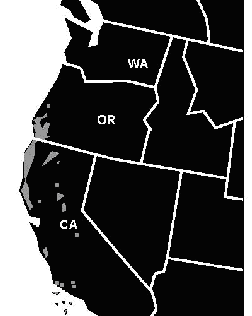
Considered a link between the Chestnut and the Oak, Tanoak (lithocarpus densiflorus) is an evergreen hardwood. It has flowers like the chestnut and acorns like the oak, and grows best on the humid moist slopes of the seaward coastal ranges.
                                  moss-covered branches on Tanoak along the Jedediah Smith River near the northern California coast tanoak_range
Back in the 1800's, when the fur trade was a booming business in Oregon, roads were built through the forests in order to log Tanoak. The tanin they produce was and is still used for treating furs and hides. Douglas fir trees were cut as a secondary use species while they were logging the Tanoak. Today that’s reversed, and tanoak is logged only because the Doug Fir trees are being cut. 
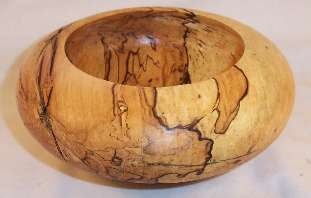
My woodworking friends and I may use Spalted Tanoak for the Craftsman-styled hutch we’re collaborating on. Spalted wood also inspired these gorgeous projects:
spalted beech
spalted%20maple%20bowl%202a
I think its simple, rustic beauty makes it a fit for Central Oregon. Can you picture other uses?

Tuesday, April 13, 2010

Reclaimed Barnwood from the Pacific Northwest

Like a weathered old man leaning on a cane, ancient barns seem to whisper sit down, I’ve got stories to tell if you’ve got time to listen.
SIDEBAR_BASE
I’ve admired the tasteful use of reclaimed barnwood from the Pacific Northwest in stunning custom homes built by Gary Norman. But I can be sensitive and skeptical. Even as I looked forward to meeting Gary, I wondered if he was actually the villainous type … you know, the Hollywood character who wouldn’t blink at mowing down a historic monument or threatening an endangered species in the name of progress.
“…Like the scary tractor in Fern Gully," Gary joked and I knew he understood and shared my sensitivity. Gary was recently asked to take down a very large barn out of Reedsport, Oregon and simply refused. “The building was very sound, set on the site pristinely and just needed a little love to last another 100 years plus. It is not appropriate to dismantle a perfectly sound structure.”
Contrarily, he’s excited about the wonderful 1x12 siding and 3x12 flooring recently reclaimed from a barn in Tidewater, Oregon. Built in 1912, the structure was used as a theater house in the 30’s and 40’s. “We will make the 3x12’s into outrageous plank flooring,” says Gary.
splash
To be considered by Barnwood Inc., a division of Gary Norman Custom Homes, a barn must have a rich history, an ample supply of timbers of useful size and character, and accessibility. Instead of being burned and destroyed, this lustrous wood is given new life in the form of fine furniture, cabinetry, siding, flooring, exterior door systems and interior doors and trim.
s_194%20kitchen
It takes a heap of craftsmanship but only a scant amount of a water-based finish to re-purpose this treasure. Natural weathering has made its durability integral. You can watch a video of the process on the Barnwood Inc. site.
It’s what Gary Norman calls a “feel good business. Nothing can replicate the character of hundred-year-old wood that’s been out in the elements.”
To contact Gary:
Phone: (541) 312-1187
Email: gary@barnwoodincorporated.com
s_Barnwood%20bed%202
         s_378%20floor
s_Lot%20194%20breezeway

Tuesday, February 2, 2010

Kitchen Trends 2010 (NKBA)

Design trends ebb and flow. The popularity of kitchen styles isn't subject to sudden, dynamic shifts, so when the National Kitchen and Bath Association reveals the results of its annual Design Trend Survey we designers don't expect to fall off of our swivel chairs in amazement. But we do pay attention.

Fieldstone Cabinetry featuring Shaker doorstyle inset into traditional face-frame. Hardwood floors and dishwasher drawers are riding a wave of popularity also. 

This is a national survey of Kitchen Designers, so allowance has to be made for regional tastes. What most appeals to folks on the East Coast often differs from what is desired in the Pacific Northwest. Architectural styles vary from one place to another. Vacation homes may require a different aesthetic appropriate to their settings.

Overall trends are useful to track, if only to reassure timid homeowners that the choices they favor will maintain value for the foreseeable future. Here are some of the NKBA's expectations for 2010:


Traditional cabinetry styles will continue to be most popular;  Contemporary style will be a close second.
Shaker is making a strong resurgence in popularity.

Cherry is the most favored wood species;  next is Maple;  Alder is trending upward on the list.

Medium to Dark stains and glazes are prevailing over lighter, natural finishes.

White and Off-White shades are still the major fave in painted cabinetry. Aside from beige and brown tones, other colors are on the decline, as are distressed finishes.

Hardwood is, more than ever, the lead flooring choice, followed by ceramic, porcelain and natural stone tile.

Granite is still in highest favor for countertops, but (and this excites me enough to do a happy spin in my swivel chair!) quartz is expected to "nearly catch up" in popularity. Backsplashes will mostly be adorned in tile, including ceramic, porcelain and glass.


Cambria Quartz countertops with a glass tile backsplash. Medium stain on cabinetry.


See what national trends the NKBA survey predicts for faucets and appliances in Part 2. Then I will report on how the Pacific Northwest is trending by comparison.

We just wrapped up a Give-Away Contest for a $65 gift certificate to All Modern.
Now to reveal the lucky winner ...
By the way thanks for all your entries...
Also by the way, glad you enjoyed visiting the All Modern website. Isn't it great?!
Oh, right, and the winner, by random integer selection, is...
Alycia Wicker

CONGRATULATIONS!
Alycia is an Interior Designer from Eastvale CA. Visit her cool site Casa Moxie here.

Wednesday, September 23, 2009

de-Sign Of The Times: Cabinets Expand at the Waistline


It's not your imagination and you are not alone.

Across the world homemakers are failing to neatly close their cabinet doors on their newly purchased dinnerware and scratching their heads about it. Cabinetmakers here and abroad are reprogramming their CNC machines to create cabinet boxes that accomodate today's "generously sized" dinnerware.

"Tabletop" trends influence cabinet design in other ways. Displaying family china and heirlooms, while still practiced, is not the end-all it was in the past, and entertaining guests is a more casual affair. According to Drew Chernoy, owner of Clementine’s Kitchen in Del Rey, CA, buyers 20 to 30 years ago were ‘collectors’ or ‘nesters,’ and had in mind different uses for each of their sets of dishes, platters, glassware and flatware. They had the ‘holiday dishes,’ the ‘summer garden party,’ etc. Some of these were more ‘formal.’ This related to their life growing up or their vision of the eating experience in their life to come. Having the ‘good dishes’ on their wedding registry further reinforced this. The underlying change is that having lots of sets of dishes and entertaining pieces, glasses, etc., just is not that important anymore to the more recent generations”(The Gourmet Retailer).

The tableware cabinet buyers are looking to store today is casual, durable and best of all, stackable. And it is growing in size. A typical dinner plate once measured 9 inches across but a trip to Crate and Barrel finds popular styles ranging from 10.5 inches up to the 11.5 inch Classic Century style (right). The product description states "Originally designed in 1952 by world-renowned designer Eva Zeisel...Dinner plate has been enlarged for today's lifestyle".

Pottery Barn offers their popular Sausalito style with dinner plates spanning 12 inches! When does a plate become a "platter"?!

This explains why dishes are boldly peeking out from upper cabinets and homeowners are having to find more creative ways to accomodate their everyday dinnerware. Custom Cabinetmaker Craig Mannhalter of Metolius Woodworks in Sisters, Oregon has retooled and increased the standard depth of uppers over the past 20 years. Fieldstone Cabinetry representative, Jeff Ptacek CKD, agrees that while the standard depth is still 12 inches, they are seeing increased requests for 13-15 inch custom depths.

Need to retrofit an existing kitchen?
  • Consider replacing some upper cabinetry with decorative open shelving.
  • Store dishes in drawers. Deep drawers at a comfortable reach work best.
  • Replace shelves in standard base cabinets with roll-outs (available at Lowes).
Planning a new kitchen?
  • Make a pre-decision about where you will store your everyday dishes. With your dish measurements in hand, have a clear discussion with your cabinet supplier about the interior clearances for uppers.
  • Consider incorporating decorative open shelving in your design for flexible storage.


On the other hand, mega-sized dishware can mean 50% more plate to pile food on, which translates into more waste and more waist. What if we instead stock up on today's "generously sized" salad plates (8 to 10 inches) for use as dinner plates? I'm wondering, since we are the consumers influencing the retail trends, if perhaps we could "stir things up". Ha!
Maybe instead of "letting out" our cabinets we should put our dishes on a diet. Better still, maybe if our dishes were on a diet, we wouldn't be.

Then no one would have to come unhinged (so to speak!).

Monday, August 31, 2009

Going Deep in the Laundry Room


As we labored to unload a rented U-Haul on a snowy day four years ago, Darlene Miller delivered a plate of fresh chocolate chip cookies and introduced herself as our neighbor.  Little did I know that she would also become a friend, a client, the person who would two years later sell her house to us and my dental hygienist. I know this all sounds off-topic but I am getting to the Laundry Room.
   When Darlene came to me for design help to plan cabinetry for the new home she and her husband Dave were building, she had but one request concerning the laundry space...a drawer with the depth and width to hold her jumbo, economy-sized box of laundry soap. She had planned such a drawer for the last two homes they had built, and loved the convenience so much that it was a top priority for their third house.


   As I mentioned, we bought the house they were vacating and let me tell you, we are happy little clams at the Millers' former address...and I have lived in harmony with Darlene's custom-depth drawer for nearly two years now. Unlike Darlene I am a big fan of liquid laundry soap, and I can testify that my own collection of laundry-time supplies fits her drawer hand-in-glove. In fact this arrangement provides a second deep drawer below the first, a handy spot for pet supplies. In our case: the cat and dog food bins, grooming tools and even the catnip mouse.
   A few specifics to discuss with your cabinet supplier:
  • A minimum 36" countertop height will probably be required to achieve optimal drawer depth.  

  • This is one area in which melamine drawer boxes are preferable over wood, for ease of cleaning.


  • Request full-extension drawer guides, for full use of the drawer from front to back.


  • I like side-mounted drawer guides with adequate load-bearing capacity, for stability.


 This concept has become a trending laundry room option...so much so that matching modular units or "storage towers" are sold as a complement to the Whirlpool and Maytag line-up of front loading washer/dryer combos.


Clicky Web Analytics